Dog owners often wonder if their pets can safely eat meat that’s past its expiration date. While dogs have stronger stomachs than humans, feeding them expired meat carries real health risks.
This guide will help pet parents understand when meat becomes dangerous for dogs and what to do if your furry friend consumes spoiled food.
We’ll cover the specific health dangers expired meat poses to dogs, safe practices for storing and serving meat to your pet, and what steps to take if your dog eats spoiled meat. Let’s explore how to keep your canine companion safe while still providing the protein they need.
Can Dogs Eat Expired Meat?
The short answer is no, feeding your dog expired or spoiled meat can put them at serious risk of foodborne illness, digestive upset, and even life-threatening conditions.
Dogs are prone to dangerous bacteria and poisons that grow in rotten food, much like humans. Expired meat may contain:
- Pathogenic bacteria such as Salmonella, E. coli, Clostridium, or Listeria, which can cause severe gastrointestinal illness.
- Toxins released by bacteria as meat decomposes. These poisons might not be eliminated by cooking, in contrast to bacteria.
- Mold and fungal growth that can produce dangerous mycotoxins, leading to neurological or organ damage.
While dogs have stronger stomach acids than humans, their digestive systems are not immune to food poisoning. In fact, spoiled protein sources like meat are especially risky.
You may also read: Can Dogs Eat Crab Sticks?
Understanding Meat Expiration for Dog Owners
A. Different types of “expired” meat and what they mean
Ever noticed those dates on meat packages and wondered what they actually mean for your dog? Let’s clear up the confusion.
“Sell by” dates aren’t actually expiration dates – they tell stores how long to display products. Meat can typically be safe for 1-3 days after this date if properly refrigerated.
“Best by” or “use by” dates indicate peak quality, not safety cutoffs. Many meats remain perfectly fine for a few days beyond these dates.
“Expired” meat falls into three main categories:
- Slightly past date but looks and smells fine – Usually safe for dogs in most cases
- Beginning to spoil – Shows early signs of deterioration but not fully rotten
- Fully spoiled – Discolored, slimy, or has a strong odor
Your dog’s stomach acid is more acidic than yours (pH 1-2 compared to human pH 2-3), which helps them handle slightly aged meat better than you could. This doesn’t mean they’re invincible to food poisoning though!
B. How expiration dates apply to dog food versus human food
Labeling requirements for human food are more stringent than those for pet food. When you’re comparing the two:
| Human Food | Dog Food |
|---|---|
| Conservative dating for safety | Often has longer shelf life |
| Regulated by FDA | Regulated by AAFCO guidelines |
| Based on microbiological safety | Based on nutritional degradation |
| More cautious approach | More flexible timeline |
Commercial dog food typically has preservatives that extend shelf life well beyond what you’d see in fresh meat from the grocery store. Dry kibble can last 12-18 months unopened, while canned food often stays good for 2-5 years before opening.
Raw meat for dogs follows the same safety guidelines as human consumption. The 40°F to 140°F “danger zone” is equally applicable since bacteria grow quickly in this temperature range, regardless of who is consuming the food.
C. Signs that meat has genuinely gone bad
Trust your senses when determining if meat has truly spoiled and become dangerous for your dog:
Visual cues:
- Gray, green, or yellowish discoloration
- Fuzzy mold growth
- Slimy film covering the surface
Smell test:
- Sour, ammonia-like, or putrid odor
- Any smell that makes you recoil
Texture changes:
- Sticky or tacky feeling
- Unusual softness or mushiness
If meat has any of these warning signs, it’s not just “expired” – it’s legitimately spoiled and potentially dangerous for your dog. While their digestive system is more robust than yours, truly rotten meat contains harmful bacteria and toxins that can make any animal sick.
When in doubt, remember this simple rule: if you wouldn’t eat it yourself with just a little extra cooking, don’t give it to your dog either.
Risks of Feeding Expired Meat to Dogs
A. Bacterial concerns including salmonella and E. coli
When you feed your dog expired meat, you’re rolling the dice with dangerous bacteria. Salmonella and E. coli are the usual suspects that multiply rapidly in old meat. Unlike humans, dogs have stronger stomach acid that can kill some bacteria, but they’re not invincible.
Your furry friend can absolutely get salmonellosis or E. coli infections. Bloody diarrhea, extreme dehydration, and in extreme situations, even death, can be brought on by these unpleasant microorganisms. Senior dogs, puppies, and dogs with compromised immune systems face even higher risks.
Think about this: the bacteria in expired meat don’t just stay in your dog’s gut. They can spread to you and your family through your dog’s feces or saliva. That innocent lick could transfer harmful bacteria straight to you.
B. Toxin development in spoiled meat
Invisible poisons that form when meat decomposes are present in outdated meat in addition to germs. These toxins aren’t destroyed by cooking, freezing, or your dog’s digestive system.
When meat spoils, proteins decompose and create biogenic amines like histamine and tyramine. These compounds can trigger allergic reactions and mess with your dog’s nervous system. The longer meat sits past its expiration date, the higher the concentration of these toxins becomes.
What’s worse, some molds that grow on old meat produce mycotoxins that can cause liver damage, neurological issues, and even cancer in dogs. You can’t always see or smell these dangers, making them particularly treacherous.
C. Digestive issues and symptoms to watch for
After your dog eats spoiled meat, watch for these warning signs:
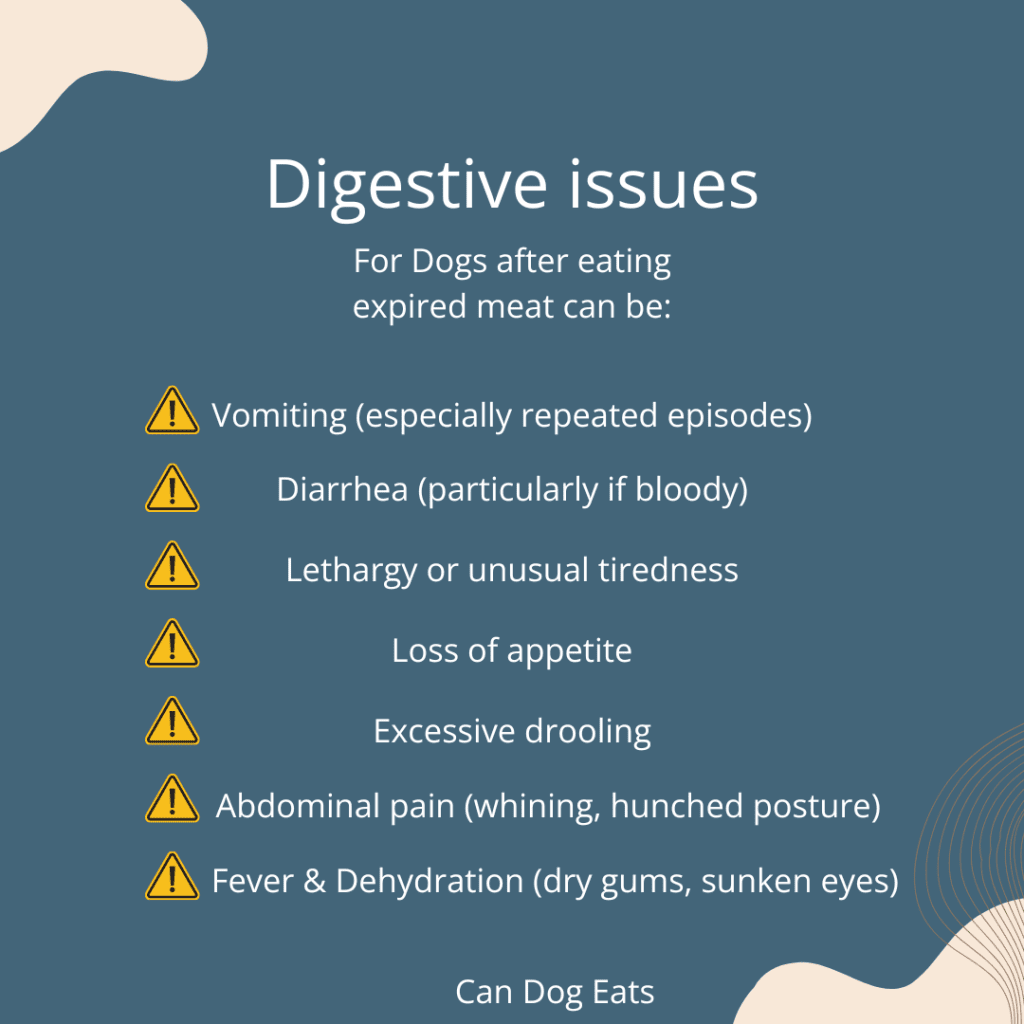
- Vomiting (especially repeated episodes)
- Diarrhea (particularly if bloody)
- Lethargy or unusual tiredness
- Loss of appetite
- Excessive drooling
- Abdominal pain (whining, hunched posture)
- Fever
- Dehydration (dry gums, sunken eyes)
If you notice any of these symptoms, don’t wait it out. Call your vet immediately, especially if symptoms are severe or your dog is a puppy, senior, or has existing health issues.
D. When expired meat becomes dangerous versus just unpalatable
Not all expired meat is equally dangerous. Meat that’s just past its “best by” date by a day or two but has been properly refrigerated might simply taste less fresh without being harmful. The real danger zone starts when meat develops these signs:
- Slimy texture
- Discoloration (grayish, greenish, or brownish hues)
- Foul or sour smell
- Visible mold
- Unusual softness or mushiness
Ground meat deteriorates more quickly than whole cuts because it has more surface area exposed to bacteria, and raw meat turns deadly far more quickly than cooked meat.
E. The myth of “dogs can eat anything”
Many pet owners believe the myth that dogs can eat anything because they’re descendants of wolves. This dangerous misconception puts your dog at risk.
While it’s true that dogs have more acid in their stomachs than humans, their digestive systems have evolved alongside humans for thousands of years. Modern dogs simply aren’t equipped to handle the bacterial loads in rotting meat that their wild ancestors might have encountered.
Your domestic dog doesn’t have the same robust immune system as wild canids that regularly consume carrion. Additionally, the meat your dog would encounter today contains preservatives, hormones, and antibiotics not found in wild prey, creating different spoilage patterns that can be more harmful.
The truth is, feeding your dog expired meat isn’t worth the risk when safe alternatives are readily available. Your dog deserves better than food you wouldn’t eat yourself.
Safe Practices for Feeding Meat to Dogs
A. Proper meat storage guidelines
Storing meat correctly is crucial when you’re feeding your furry friend. Always keep raw meat in the refrigerator at temperatures below 40°F (4°C). If you won’t use it within 2-3 days, pop it in the freezer where it can stay good for months.
Label everything with dates! This simple habit helps you track when the meat was purchased and when it should be used by. A quick marker note on the package saves you from guesswork later.
For defrosting, never leave meat sitting out at room temperature. Instead, thaw it in the refrigerator overnight. This slow method prevents bacteria from multiplying rapidly. If you’re in a hurry, use the defrost setting on your microwave, but cook the meat immediately afterward.
Once cooked, don’t leave meat sitting out for more than two hours. Bacteria grow quickly at room temperature, and what might seem fine to you could make your dog sick.
B. Safe timeframes for serving slightly expired meat
Dogs have stronger stomach acid than humans, which means they can sometimes handle meat that’s just past its prime—but there are limits.
For meat that’s 1-2 days past its “sell by” date but has been properly refrigerated, you might still feed it to your dog if it passes these checks:
- No foul or sour smell
- No slimy texture
- No discoloration (green, gray, or brown spots)
- No mold whatsoever
Ground meat is riskier than whole cuts and should be used more quickly. While a steak might be okay 1-2 days past its date, ground beef should be used by the expiration date.
Keep this golden rule in mind if you’re ever unsure: throw it aside! Your dog’s health isn’t worth the risk of feeding questionable meat.
C. Cooking methods that increase safety
Cooking meat thoroughly kills most harmful bacteria that could make your dog sick. Aim for an internal temperature of at least 165°F (74°C) for ground meats and 145°F (63°C) for whole cuts, followed by a 3-minute rest time.
Boiling is particularly effective for making slightly older meat safer. The high temperatures kill pathogens while creating a palatable meal for your pup. Plus, you can add dog-friendly vegetables to make a nutritious stew.
Avoid these risky cooking practices:
- Don’t season meat for dogs with onions, garlic, or excessive salt
- Skip marinades that contain alcohol or high amounts of sugar
- Never feed your dog meat that’s been cooked with bones that could splinter
Slow cooking is another excellent option. The extended cooking time at consistent heat helps break down tougher meat while eliminating harmful bacteria. Just make sure the meat reaches the proper temperature throughout.
Remember to let cooked meat cool completely before serving it to your dog to prevent mouth burns. Cut it into appropriate sizes based on your dog’s breed and chewing habits.
What To Do If Your Dog Eats Spoiled Meat
A. Immediate actions to take
Found your dog chowing down on some questionable meat? Don’t panic, but act fast. First, remove any remaining spoiled meat from your dog’s reach. This prevents them from ingesting additional possibly dangerous microorganisms. Next, check the packaging if available to identify exactly what type of meat it was and how long it’s been expired.
Give your dog plenty of fresh water to help flush their system. But resist the urge to induce vomiting unless specifically instructed by a vet – sometimes bringing the meat back up can cause more harm than good, especially if it’s been more than two hours since ingestion.
Keep any packaging or remains of the meat. Your vet might need this information if your dog needs treatment later. While you’re monitoring your pup, jot down what they ate, how much they consumed, and when it happened. This timeline will be invaluable if veterinary care becomes necessary.
B. Warning signs that require veterinary attention
Your dog’s body will tell you when something’s wrong. Watch for these red flags that signal it’s time to call the vet immediately:
- Persistent vomiting (more than 2-3 times)
- Bloody diarrhea or vomit
- Severe lethargy or collapse
- Abdominal pain – whining when touched or a tense, bloated belly
- Fever above 103°F
- Excessive drooling or foaming at the mouth
- Difficulty breathing
- Neurological symptoms like tremors or seizures
Trust your gut feeling. If something seems seriously wrong with your furry friend, don’t wait – better safe than sorry when it comes to food poisoning in dogs.
C. Home monitoring techniques
You can monitor your dog at home in moderate circumstances. Create a simple monitoring chart tracking:
- Food and water intake
- Bathroom habits (frequency, consistency, color)
- Energy levels
- Behavior changes
Check their gums regularly – they should be pink and moist, not pale, white, or tacky. Release the gum after pressing it until it turns white; it should turn pink again in one to two seconds. This “capillary refill time” helps assess circulation.
For the first day, check their temperature every several hours. A digital rectal thermometer works best (normal is 101-102.5°F).
D. Preventative care options
The best solution? Prevention. Store meat safely away from curious noses – preferably in sealed containers in the fridge or freezer. For the disposal of expired goods, think about a dog-proof trash can with a tight-fitting cover.
Create a regular schedule for checking expiration dates in your fridge. A monthly clean-out prevents forgotten items from becoming dangerous temptations.
To keep your dog’s gut healthy, think about using probiotics made especially for them. A strong digestive system handles occasional mishaps better than a compromised one.
Train the “leave it” command thoroughly. This life-saving command can stop your dog mid-chomp when they’ve found something dangerous.
Remember, even with the best prevention, accidents happen. Having an emergency fund for unexpected vet visits provides peace of mind when facing potential food poisoning situations.
Final Thoughts
Feeding your dog expired meat comes with significant risks including food poisoning, bacterial infections, and digestive distress. While dogs have stronger stomach acids than humans, this doesn’t make them immune to the dangers of spoiled food.
Always inspect meat thoroughly before feeding it to your pet, looking for discoloration, unusual smells, or sliminess that could indicate spoilage.
For your dog’s safety, stick to fresh meats within their expiration dates, store pet food properly, and practice proper handling techniques.
If your dog eats spoiled meat, monitor them closely for symptoms like vomiting or lethargy, and don’t hesitate to contact your veterinarian if they show signs of illness.
Remember that nutritious commercial dog foods or fresh, properly stored meats are always better choices than taking chances with expired products.
FAQs
Can dogs eat expired meat if cooked?
No. Cooking kills bacteria but not the toxins produced by spoiled meat, which can still make dogs sick.
Can dogs eat slightly off meat?
No. Even “slightly off” meat may contain harmful bacteria and toxins dangerous for dogs.
Can dogs eat expired meat in the fridge?
No. Meat past its expiration date, even if refrigerated, can carry bacteria that cause food poisoning in dogs.
Can dogs eat expired meat raw?
Absolutely not. Raw spoiled meat is highly unsafe and can lead to serious illness in dogs.