
Who doesn’t love the rich aroma of beef cooking in the kitchen—your dog included? If you’ve ever caught your pup giving you that hopeful “share with me” stare while you’re making a roast, you’ve probably wondered if a little beef tallow is safe for them. As a responsible dog parent, it makes sense to check before dropping any savory scraps into their bowl.
Beef tallow, the rendered fat from beef, isn’t just a throwback to old-fashioned cooking. It’s also a nutrient-dense ingredient that can offer real benefits for dogs when fed in the right way.
In this comprehensive guide, I’ll walk you through everything you need to know about feeding beef tallow to dogs—its potential benefits, how dogs can eat beef tallow, and the risks if overdone.
Vet Checked
Key Takeaways
- Beef tallow is safe for dogs to consume in small amounts; however, it is not recommended for their regular meals.
- High in calories and saturated fat—too much can lead to obesity or pancreatitis.
- May offer skin, coat, and energy benefits when fed in moderation.
- It is always better to take pure, unseasoned beef tallow (100%) without any additives.
- Introduce slowly and monitor for digestive upset before regular use.
Can Dogs Eat Beef Tallow?
Yes, Dogs can eat beef tallow.
Beef tallow is rendered beef fat, and while it’s not toxic to dogs, it’s extremely high in saturated fats.
Eating too much can quickly lead to weight gain and put extra strain on your dog’s heart and pancreas.
In small amounts, beef tallow can be safe. However, it offers little nutritional benefit compared to healthier fat sources like fish oil or chicken fat. It’s best given only as an occasional treat, not a regular part of their diet.
Too much fatty food, including beef tallow, can trigger pancreatitis—a painful and potentially life-threatening condition in dogs. If you’re unsure about feeding your pet, it’s best to opt for a safer food approved by a veterinarian.
You May Also Read: Can Dogs Eat Crab Sticks?
Benefits of Beef Tallow for Dogs
A. High-quality source of essential fats
Ever wonder why your dog’s eyes light up when they smell meat cooking? Their bodies know what they need! Beef tallow isn’t just any fat – it’s packed with nutrients your four-legged friend craves.
When you feed beef tallow to a dog, you’re giving them saturated fats that actually support their health. Unlike humans, dogs thrive on these fats. Their bodies are designed to process animal fats efficiently, converting them into sustained energy.
The fat-soluble vitamins in beef tallow (A, D, E, and K) are crucial for your pup’s overall health.
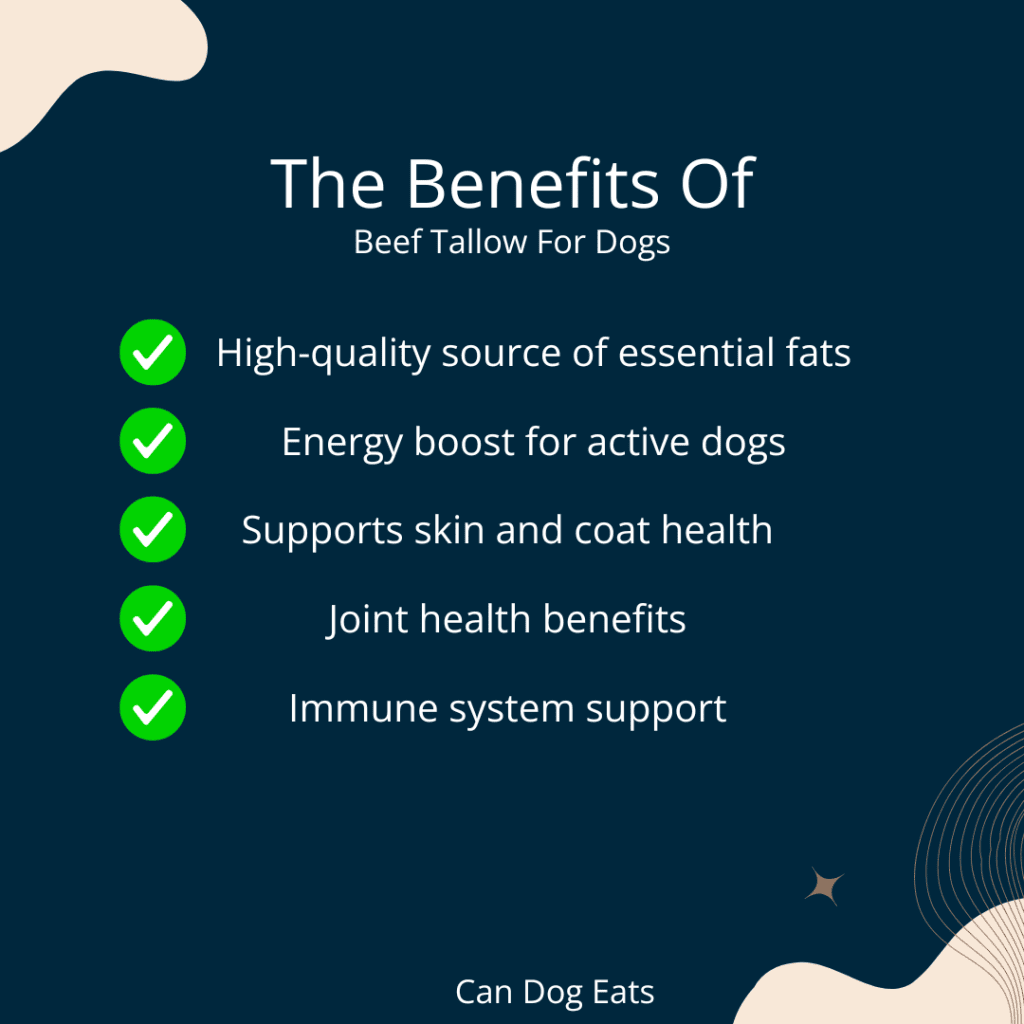
B. Energy boost for active dogs
Got an energetic border collie or a hiking buddy? Beef tallow might be very effective. The dense calories in tallow provide long-lasting energy that kibble alone often can’t match.
Many pet parents notice their active dogs maintain better stamina when tallow is added to their diet. It’s because fat burns slower than carbs, giving your dog sustained energy rather than quick spikes and crashes.
During colder months, this energy boost becomes even more valuable. Your dog’s body uses those fat calories to maintain body temperature, keeping them warm and comfortable during outdoor adventures.
C. Supports skin and coat health
Does your dog have dry, itchy skin and a dull coat? Beef tallow can play a positive role here. The fatty acids work from the inside out to nourish skin cells and hair follicles.
You’ll often notice improvements within weeks – less scratching, reduced dandruff, and a shine returning to their coat. The omega fatty acids in tallow aid in upholding the skin’s moisture barrier, thus preventing irritants from entering and preserving hydration.
This is especially helpful during seasonal changes when many dogs experience skin issues. A little tallow in their diet can ease the transition between dry winter air and humid summer conditions.
D. Joint health benefits
As your pet gets older, joint health becomes a significant concern. The natural compounds in beef tallow, including conjugated linoleic acid (CLA), have anti-inflammatory properties that may help reduce joint pain and stiffness.
Several pet dog owners have in common that their dogs are getting more energetic after adding tallow to their diet. While it’s not a miracle cure, the fat-soluble nutrients support cartilage health and may slow the progression of age-related joint issues.
E. Immune system support
Your dog’s immune system relies on proper nutrition, and beef tallow delivers key components for optimal function. The vitamin D content helps regulate immune responses, while the saturated fats provide building blocks for cell membranes and hormones.
During times of stress or recovery, these nutrients become even more critical. A robust immune system means your dog can better fight off infections and bounce back faster from illness.
The antimicrobial properties of certain fatty acids in tallow may also help protect against harmful bacteria in the gut, supporting your dog’s microbiome and overall health.
Potential Risks and Concerns of Eating Beef Tallow For Dogs
Caloric Density and Weight Gain
Beef tallow isn’t just rich in flavor, it’s packed with calories, too. A single tablespoon contains about 115 calories, which can add up quickly if you’re not careful with portions.
Think about it—your dog doesn’t need that many extra calories in their diet. If you regularly add tallow to their meals without adjusting their regular food intake, you might notice some weight gain before you know it.
Weight gain in dogs isn’t just a cosmetic issue. Those extra pounds put stress on their joints, increase the risk of diabetes, and can lead to heart problems. Especially for breeds already prone to obesity (looking at you, Labradors and Beagles), even small amounts of high-calorie treats can tip the scale in the wrong direction.
So what’s the fix? Moderation is key. If you’re giving your dog beef tallow:
- Use it as an occasional treat, not a daily supplement
- Reduce their regular food portion slightly on days they get tallow
- Monitor their weight and body condition regularly
Digestive Upset in Sensitive Dogs
Not all canine stomachs are created equal. While some dogs can eat beef tallows without issue, others have the digestive sensitivity of a fine-tuned instrument.
The high fat content in beef tallow can trigger digestive upset in dogs not used to rich foods. This might look like:
- Loose stools or diarrhea
- Vomiting
- Discomfort or restlessness
- Excessive gas (prepare your nose!)
If your dog has a history of pancreatitis or other digestive issues, beef tallow might be too risky. The concentrated fat can potentially trigger a pancreatic flare-up, which is painful and potentially dangerous for your pup.
Starting with tiny amounts is the smart approach. Give your dog just a lick or two of tallow to begin with, then wait 24-48 hours to see how their system responds before offering more.
Quality Matters: Choosing Pure Tallow
Not all beef tallow is created equal, and this really matters for your dog’s health and safety.
Commercial tallow products might contain additives, preservatives, or seasonings that are harmful to dogs. Garlic and onion, common flavor enhancers in human-grade cooking fats, are toxic to dogs even in small amounts.
When shopping for tallow for your furry friend, look for:
- 100% pure beef tallow with no additives
- Grass-fed sources, when possible (they contain better fat profiles)
- Properly rendered products that have removed impurities
Rendering removes proteins that could spoil, making the tallow safer and more shelf-stable. Poor-quality tallow might contain remnants that could go rancid and cause digestive issues or even toxicity.
Your best bet? Find a pet-specific tallow product, or go with a human-grade option that’s guaranteed to be pure. Your dog’s sensitive system deserves nothing less than the best quality you can provide.
How to Safely Feed Beef Tallow to Dogs
Recommended serving sizes by dog weight
Starting your pup on beef tallow requires some careful measuring. Too much and you’re dealing with an upset tummy, too little and you’re missing out on those nutritional benefits.
Here’s a simple guide to follow:
| Dog Size | Weight Range | Daily Tallow Amount |
|---|---|---|
| Small | 11-25 lbs | 1/2 teaspoon |
| Medium | 26-50 lbs | 1 teaspoon |
| Large | 51-75 lbs | 2 teaspoons |
| X-Large | 76+ lbs | 1 tablespoon |
Remember, these are starting points. Your dog’s individual needs might vary based on activity level and overall diet. Always begin with smaller amounts than recommended and gradually work your way up.
Proper preparation methods
Getting beef tallow ready for your four-legged friend isn’t complicated, but doing it right matters.
First, source high-quality tallow. Grass-fed, organic options are worth the extra dollars since they contain better fatty acid profiles and fewer potential contaminants.
To prepare:
- Melt the tallow until it’s just liquid (not hot)
- Let it cool until it’s warm but not solidified
- Mix thoroughly with your dog’s regular food
- Start with half the recommended amount for the first week
Got solid tallow? No problem. Just grate a small amount over your dog’s food, similar to how you’d add cheese to pasta. It’ll melt slightly from the warmth of the food, making it easier to mix in and more appetizing.
Never add seasoning or salt to tallow for your dog – plain is perfect!
Introduction strategies for first-time tallow feeders
Adding something new to your dog’s diet is always a bit of an adventure. Here’s how to make the tallow transition smooth:
Start on a weekend when you’re home to monitor how your pup responds. Day one is all about the tiniest taste – just a drop mixed into their regular food.
If that goes well, follow this schedule:
- Days 1-3: 25% of the recommended amount
- Days 4-7: 50% of the recommended amount
- Week 2: 75% of the recommended amount
- Week 3: Full recommended amount
Mix the tallow thoroughly with their regular food rather than offering it separately. This helps your dog associate the new flavor with familiar meals.
Keep treats minimal during the introduction week to avoid digestive confusion about potential causes of issues.
Signs your dog is tolerating tallow well
Watching how your furry friend responds to beef tallow tells you everything you need to know about whether it’s a good addition to their diet.
Positive signs include:
- Consistent, normal stools (not too hard, not too soft)
- Maintained energy levels or a slight increase
- Improved coat shine within 2-3 weeks
- Healthy skin with less flaking or itching
- Continued enthusiasm for mealtime
If you notice any of these red flags, scale back or discontinue:
- Loose stools or diarrhea
- Vomiting after meals
- Lethargy or unusual behavior
- Loss of appetite
- Excessive thirst
Your dog’s body will tell you what’s working. Most pups adapt beautifully to small amounts of beef tallow, but every dog is unique.
Trust your instincts and what you observe – you know your dog better than anyone.
Conclusion
Beef tallow can indeed be a nutritious addition to your dog’s diet when provided properly. Rich in essential fatty acids and fat-soluble vitamins, it offers numerous benefits, including improved coat health, enhanced energy levels, and support for cognitive function.
However, moderation is key—excessive consumption may lead to weight gain, pancreatitis, or digestive upset in some dogs.
For the best results, start with small amounts of high-quality, pure beef tallow and monitor your dog’s reaction. Whether you choose to add it as a food topper, create homemade treats, or use it as a pill disguise, beef tallow can be a versatile ingredient that many dogs enjoy.
Always consult with your veterinarian before making significant changes to your pet’s diet, especially if they have existing health conditionstions or dietary restrictions.
FAQs
Can dogs eat beef tallow raw?
Yes, but only in very small amounts due to its high fat content.
Is beef tallow good for dogs’ skin?
It can help moisturize skin, but other oils may be healthier.
Is beef tallow good for dogs’ paws?
Yes, it can soften and protect dry or cracked paw pads.
What are the benefits of beef tallow for dogs?
It offers extra calories and vitamins, but should be given rarely.